
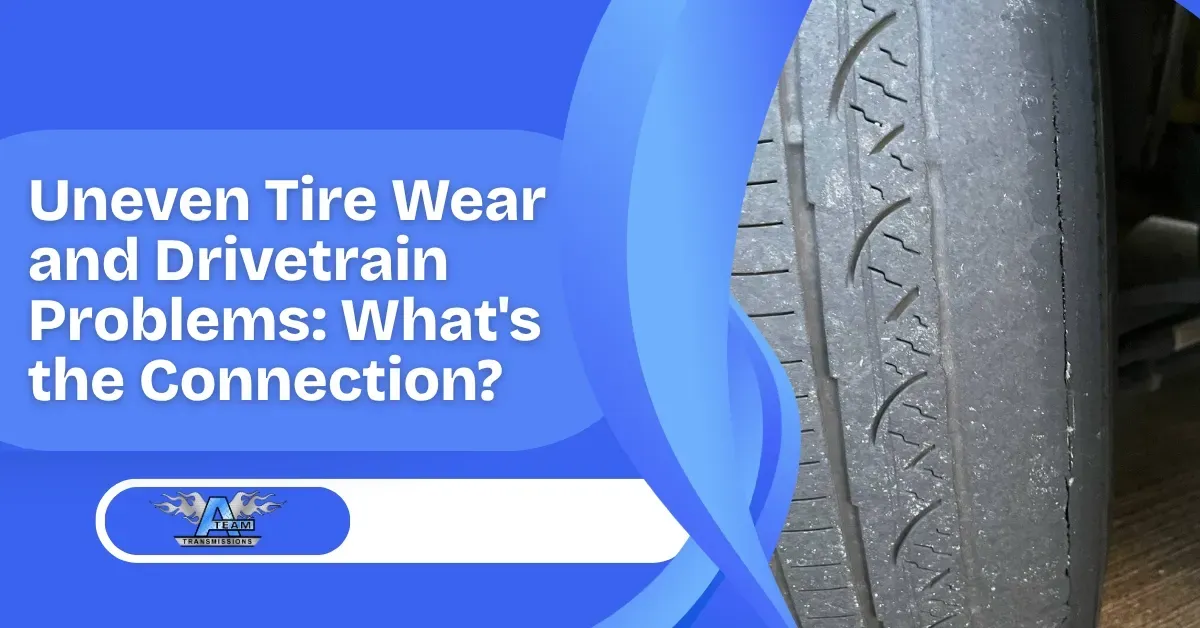
Uneven tire wear and drivetrain problems can be connected when a vehicle has vibration, binding, loose driveline parts, differential wear, or power delivery issues. Tire wear alone does not prove a drivetrain failure, but it can be an early clue when it appears with noise, clunking, leaks, or rough acceleration. A Team Transmissions helps Columbus-area drivers diagnose differential, drivetrain, and transmission concerns before repair decisions are made. If the tires are wearing strangely and the vehicle feels different on the road, the full driveline deserves a closer look.
How Uneven Tire Wear and Drivetrain Problems Can Be Connected
Uneven tire wear can come from alignment problems, suspension wear, poor tire pressure, missed rotations, or damaged steering parts. It can also appear alongside drivetrain issues when a vehicle is not moving power smoothly to the wheels. The drivetrain includes parts that move power from the engine and transmission to the wheels. That can include the transmission, driveshaft, axles, transfer case, and differential, depending on the vehicle. Uneven tire wear and drivetrain problems become more concerning when the vehicle also whines, hums, vibrates, clunks, pulls, or feels strained during acceleration. Those added signs suggest the issue may not be limited to the tires.
What Tire Wear Patterns May Be Telling You
Tire wear patterns help show how the vehicle has been behaving over time. They do not give the full diagnosis by themselves, but they can guide the inspection.
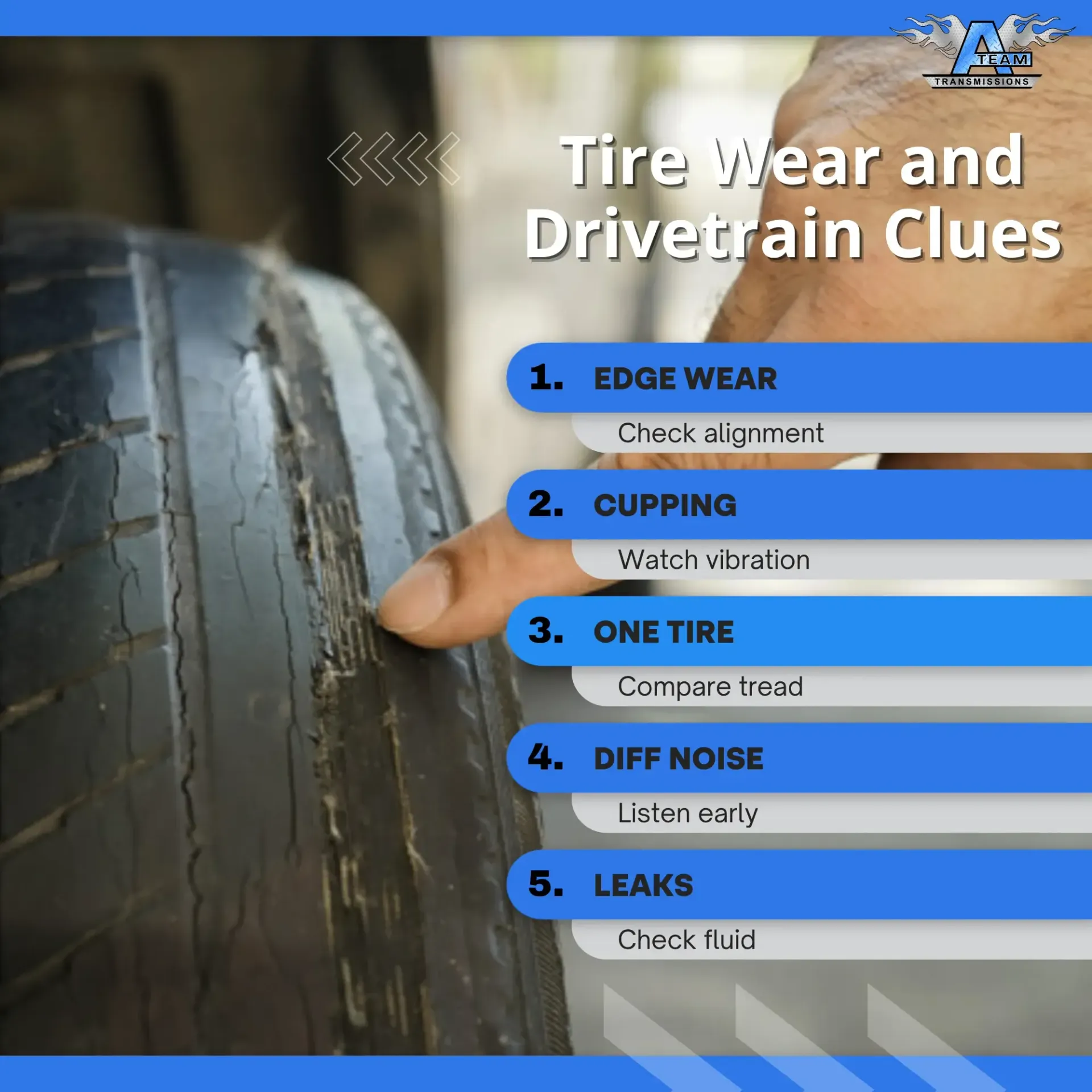
Edge Wear Can Point to Alignment or Load Issues
Inside or outside edge wear often points to alignment, suspension geometry, or tire pressure problems. A hard pothole hit on I-270, Morse Road, Hamilton Road, or Refugee Road can push alignment out of range and start uneven wear. If edge wear appears with vibration or a clunk under power, the inspection should not stop at the tire tread. Axles, mounts, joints, and differential-related parts may also need attention.
Cupping Can Point to Vibration or Worn Parts
Cupping looks like uneven dips around the tire tread. It can come from worn shocks, struts, balance issues, wheel bearings, or other rotating parts. Cupping can also make road noise sound worse. If the hum changes when accelerating or letting off the gas, drivetrain testing may help separate tire noise from differential or driveline noise.
One Tire Wearing Faster Needs a Closer Look
One tire wearing faster than the others can point to a localized issue. The cause may be inflation, alignment, brake drag, suspension wear, or a drivetrain part affecting one corner. On all-wheel drive and four-wheel drive vehicles, mismatched tire wear can create extra strain. Different tire sizes or tread depths can force driveline parts to work harder than they should.
How the Differential Affects Power Delivery
The differential helps the wheels receive power while allowing them to rotate at different speeds during turns. When it has fluid loss, bearing wear, gear wear, or internal damage, the vehicle may feel or sound different.
The Differential Helps Wheels Turn at Different Speeds
Your inside and outside wheels do not travel the same distance during a turn. The differential helps manage that difference while still sending power to the wheels. A worn or stressed differential may cause whining, clunking, grinding, or rough movement during turns. Those signs can appear during parking lot turns, neighborhood driving, or ramp turns near I-70 and the Outerbelt.
Low Differential Fluid Can Create Heat and Wear
Differential fluid protects gears and bearings from heat and metal-on-metal contact. A leak near the differential can reduce that protection and allow wear to build. Drivers looking for differential repair in Columbus, OH, often notice a whine, hum, leak, or clunk first. Catching the problem early may help prevent damage from spreading to nearby driveline parts.
Driveline Noise Can Sound Like Tire Noise
Driveline noise can be mistaken for tire noise, especially on rough pavement. A differential whine may change with throttle input, while tire noise usually follows road speed and pavement texture. Drivetrain problems in Columbus can be harder to identify because local roads already create plenty of vibration and road noise. A road test and inspection help separate tire, bearing, differential, axle, and transmission-related concerns.
Why Columbus Roads Can Make Drivetrain Problems Show Up Sooner
Columbus roads can be hard on tires and driveline parts. Freeze-thaw cycles, potholes, construction zones, road salt, and stop-and-go traffic can all add stress. A driver commuting from Worthington or Westerville to the north side may notice vibration at highway speed. A driver near Pickerington, Reynoldsburg, or Canal Winchester may hear clunking after repeated turns, hills, or rough road impacts. Trucks and SUVs used for towing, hauling, or weekend trips can place more load on the differential. If a tire pattern changes after months of rough pavement or heavy use, the driveline should be part of the inspection.
Why the Inspection Should Go Beyond the Tires
Uneven tire wear causes can overlap with differential, axle, driveshaft, suspension, and transmission concerns. A complete inspection helps avoid replacing tires only to have the same wear or vibration return. A Team Transmissions evaluates the larger driveline picture. That can include checking for leaks, listening for differential noise, reviewing when vibration happens, and determining whether the concern is tied to acceleration, turns, coasting, or shifting. Transmission repair in Columbus, OH, may become part of the discussion if the vehicle also slips, shifts harshly, delays engagement, or struggles to deliver power. Differential repair is more likely when the concern includes whining, clunking, fluid leaks, or load-related noise near the axle area.
Takeaways
Uneven tire wear is not always a drivetrain issue, but it should not be ignored when it appears with vibration, whining, clunking, leaks, or rough acceleration. The tires, differential, axles, suspension, and transmission all work close enough together that one problem can feel like another. For Columbus drivers, rough roads and seasonal weather can make small issues show up sooner. A careful inspection helps identify the real cause before new tires wear unevenly again or driveline damage becomes more expensive.
Frequently Asked Questions About Tire Wear and Drivetrain Problems
Can a Bad Differential Cause Uneven Tire Wear?
A bad differential can contribute to uneven tire wear in some cases, especially if the driveline is binding, loose, or not allowing smooth wheel-speed differences. Tire wear can also come from alignment, suspension, tire pressure, or rotation problems, so an inspection is needed.
What Tire Wear Patterns Suggest a Drivetrain Problem?
No single tire wear pattern proves a drivetrain problem. Uneven wear becomes more concerning when it appears with vibration, whining, clunking, leaks, or rough power delivery.
Can Mismatched Tires Damage the Drivetrain?
Mismatched tires can strain some all-wheel drive and four-wheel drive systems. Different tread depths or tire sizes can make the drivetrain work harder to manage wheel-speed differences.
Should I Replace My Tires Before Checking the Drivetrain?
Unsafe tires should be replaced, but the cause of the uneven wear should still be found. If the vehicle also has vibration, noise, leaks, or drivability changes, a drivetrain inspection should happen before assuming new tires will solve the problem.
How Do I Know If I Need Differential Repair?
You may need differential repair if you hear whining, humming, grinding, or clunking near the axle area. Fluid leaks, vibration, and rough power delivery are also signs that the differential and related driveline parts should be checked.
Get Differential and Drivetrain Help from A Team Transmissions
If your tires are wearing unevenly and your vehicle also feels noisy, loose, rough, or strained under power, A Team Transmissions can help you find the source. Our team provides differential repair in Columbus, OH, along with driveline checks and transmission services when the symptoms point beyond the tires. Our North Columbus location is at 6200-C Huntley Road, Columbus, OH 43229, and you can call (614) 848-8484. Our East Columbus / Pickerington location is at 836 Refugee Road, Pickerington, OH 43147, and you can call (614) 864-9520. Bring the vehicle in so we can determine whether the concern is tire-related, differential-related, transmission-related, or part of the larger drivetrain system.
Share Us On:

Founder of
A Team Transmissions, Sean Avner, is a second-generation transmission specialist whose path began in the trade with his father, who owned an AAMCO in Decatur, GA. Before focusing on transmissions, Sean worked as a general technician at a small shop, giving him a practical view of how clear answers and honest service matter to drivers.
Since founding A Team Transmissions in March 2008, Sean has built the shop around integrity and long-term customer relationships, now serving central Ohio from locations in Columbus and Pickerington. As an ASE-certified shop, his team covers the full range of transmission and drivetrain service, from transmission diagnostics to clutch repair and replacement, with specialized experience servicing BMW and Ford transmissions including other makes and models.


