
A clutch pedal should feel predictable. You press it, the clutch releases, you shift, and the pedal comes back up. When you have a clutch pedal going to the floor, that normal rhythm disappears. The pedal may feel soft, drop with little resistance, or refuse to return the way it should. For Columbus drivers, that can turn a routine commute into a stressful situation fast. If the pedal drops while you are leaving a parking lot, sitting on Morse Road, or trying to merge onto I-270, the issue needs attention. The vehicle may become harder to control or impossible to shift if the problem gets worse.
Why a Clutch Pedal Going to the Floor Should Not Be Ignored
A clutch pedal going to the floor is usually a sign that the clutch release system is not working correctly. In many manual transmission vehicles, the pedal relies on hydraulic pressure to move the clutch release components. If that pressure is lost, the clutch may not disengage. That means you may have trouble getting into gear, shifting smoothly, or moving the vehicle without grinding. The problem may start as a soft pedal, but it can quickly become a no-shift condition if the underlying cause gets worse. This is one reason clutch repair in Columbus, OH should start with an inspection instead of assumptions. A worn clutch disc, hydraulic leak, release bearing issue, or cylinder failure can create overlapping symptoms from the driver’s seat.
What a Soft or Dropping Clutch Pedal Can Mean
A clutch pedal problem can come from several parts of the system. The pedal feel, leak location, shifting behavior, and when the issue began all help point the inspection in the right direction.
Low clutch fluid or a leak
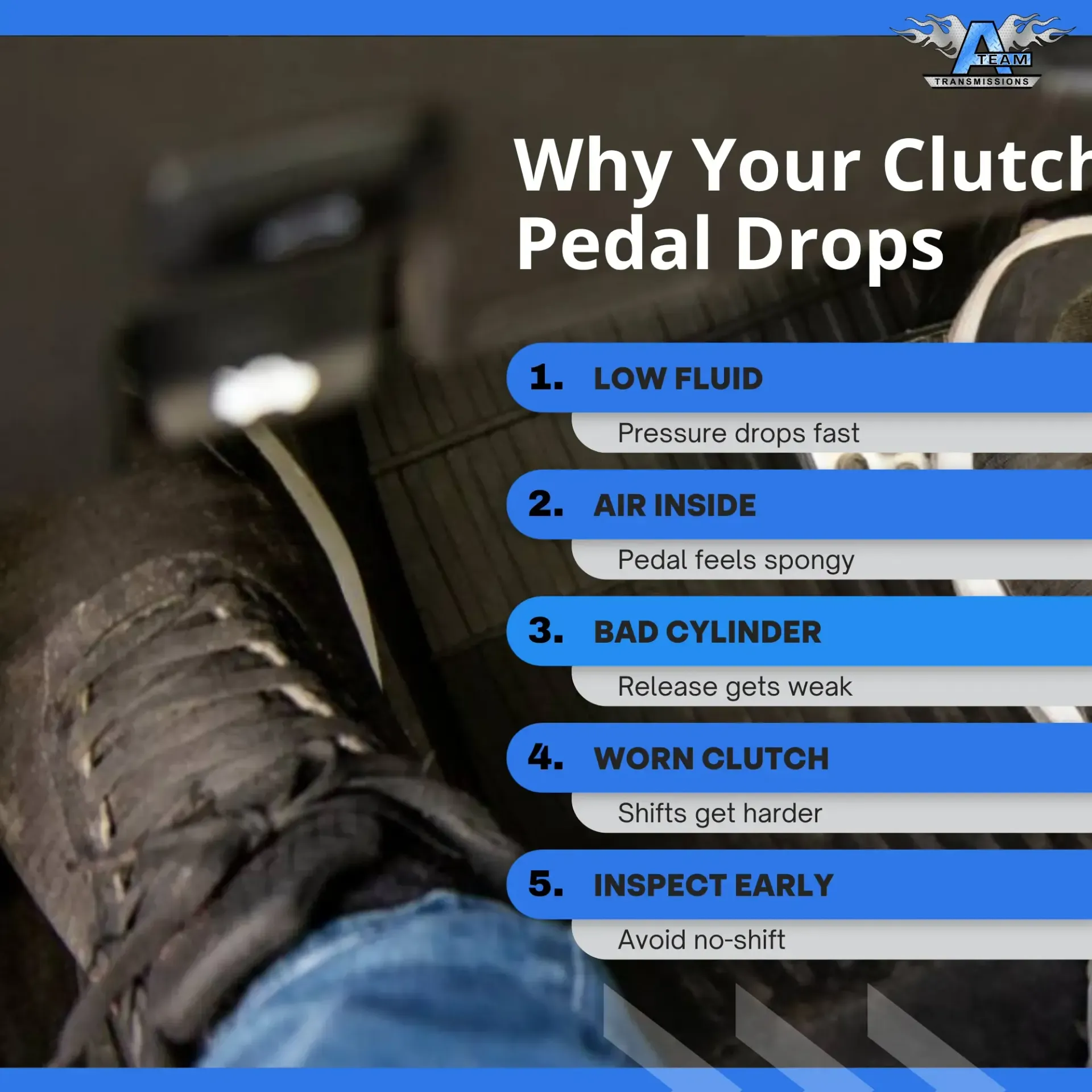
Many clutch systems use hydraulic fluid to move pressure from the pedal to the clutch release mechanism. If fluid leaks out, the pedal may lose resistance and sink toward the floor. You may see fluid near the firewall, under the vehicle, or around clutch hydraulic parts. Even a small leak can affect pedal feel once sufficient fluid is lost.
Air in the hydraulic system
Air in the hydraulic system can make the pedal feel spongy or inconsistent. Instead of firm pressure, the pedal may feel soft because air compresses in a way fluid does not. This can happen after a leak, recent service, or a failing hydraulic part. Bleeding the system may be part of the repair, but the leak or failure that allowed air in still needs to be found.
Failing master or slave cylinder
The clutch master cylinder and slave cylinder help create and apply the pressure needed to operate the clutch. If either one fails, the pedal can drop, feel weak, or stop returning properly. A failing cylinder may also make the problem come and go at first. One trip feels normal, then the next drive brings a soft clutch pedal and difficult shifting.
Worn clutch or release components
A worn clutch assembly, release bearing, pressure plate, or related part can change how the clutch engages and disengages. In some cases, the pedal may feel abnormal because the release side of the system is no longer moving correctly. This is where manual transmission clutch problems can get confusing. A worn clutch and a hydraulic problem may both cause hard shifting, grinding, or trouble getting into gear.
Cable or linkage issues on older vehicles
Some older manual transmission vehicles use a cable or mechanical linkage instead of a hydraulic release system. If the cable stretches, binds, breaks, or falls out of adjustment, the pedal may drop or fail to release the clutch properly. The repair path depends on the vehicle design. That is why the inspection should confirm the system type before deciding what needs to be repaired.
Columbus Driving Conditions That Can Expose Clutch Trouble
Clutch problems often show up during the exact kind of driving Columbus drivers deal with every week. Stop-and-go traffic on I-71, repeated starts around campus, and slow movement through the I-270 Outerbelt all make the clutch work harder than steady highway cruising. Cold Ohio mornings can also make a weak pedal feel more obvious. If the clutch is already borderline, a January start in Westerville or Reynoldsburg may bring stiff shifting or a pedal that does not return cleanly. Hills, traffic lights, and repeated takeoffs in neighborhoods like Clintonville, Upper Arlington, and German Village also create extra clutch engagement cycles. A healthy clutch system can handle daily driving, but a weak hydraulic part or worn release system may show itself during those repeated starts.
What to Do When Your Clutch Pedal Drops
The way you respond can help prevent extra damage. A clutch pedal problem is not something to muscle through for days if the vehicle is already hard to shift.
Avoid forcing the vehicle into gear
If the clutch is not disengaging, forcing the shifter can create grinding or damage to other parts. It may feel like the shifter is the problem, but the real issue could be the clutch not releasing. If the vehicle will not go into gear safely, stop driving and arrange service.
Watch for leaks and changing pedal feel
Look for fluid under the vehicle or near the clutch pedal area. Also pay attention to whether the pedal feels worse after sitting overnight, after warming up, or after heavy traffic. Those details help a technician understand whether the problem is hydraulic, mechanical, or related to clutch wear.
Schedule an inspection before driving gets worse
If the pedal still works but feels wrong, use that window wisely. Scheduling a clutch inspection in Columbus, OH can often identify the issue before the vehicle becomes stranded. Waiting until the pedal stays on the floor may leave you stuck in a parking lot, at work, or along a busy road.
How Clutch Diagnosis Helps Find the Real Problem
The best clutch repair decisions come from testing the system, not guessing from the symptom alone. A Team Transmissions looks at pedal feel, engagement point, fluid condition, visible leaks, release behavior, and how the vehicle shifts. Sometimes the answer is a hydraulic repair. Sometimes, the vehicle needs clutch replacement in Columbus, OH because the clutch assembly is worn beyond adjustment or partial repair. Other times, the issue may involve the manual transmission or another drivetrain component. The goal is simple: find the cause, explain it clearly, and help you choose the right next step.
Takeaways
A clutch pedal that drops to the floor is usually a sign that the clutch release system needs attention. Low fluid, leaks, air in the hydraulic system, cylinder failure, worn clutch parts, and linkage issues can all change pedal feel. The safest next step is a proper inspection before the vehicle becomes hard to shift or impossible to drive. With the right diagnosis, you can understand the cause and choose the repair that actually fits the problem.
Frequently Asked Questions About a Clutch Pedal Going to the Floor
Can I drive with the clutch pedal on the floor?
You should not continue driving if the clutch pedal stays on the floor or the vehicle will not shift safely. Driving in that condition can leave you stranded and may cause additional wear if you force the vehicle into gear.
Does a soft clutch pedal always mean I need a new clutch?
No, a soft clutch pedal does not always denote that the clutch assembly needs replacement. Hydraulic leaks, air in the system, or a failing master or slave cylinder can also cause a soft pedal.
Why did my clutch pedal suddenly lose pressure?
Sudden pressure loss often points to a hydraulic issue, such as a leak or failed cylinder. It can also happen if a release component breaks or a cable system fails on an older vehicle.
What is the difference between clutch repair and clutch replacement?
Clutch repair may involve fixing a leak, replacing a hydraulic part, adjusting a linkage, or correcting a release system issue. Clutch replacement usually means replacing the worn clutch assembly and related parts needed to restore proper engagement.
When should I schedule a clutch inspection?
Schedule an inspection when the pedal feels soft, drops too low, sticks, grinds during shifts, or changes from one drive to the next. Early inspection gives you a better chance of finding the issue before the vehicle becomes difficult to move.
Get Clear Clutch Repair Help from A Team Transmissions in Columbus
If your clutch pedal is going to the floor, shifting feels harder than usual, or your manual transmission vehicle is acting differently, A Team Transmissions can help you get a clear answer. Our team provides clutch repair in Columbus, OH, along with related drivetrain and transmission support for local drivers. Our North Columbus location is at 6200-C Huntley Road, Columbus, OH 43229, and you can call (614) 848-8484. Our East Columbus / Pickerington location is at 836 Refugee Road, Pickerington, OH 43147, and you can call (614) 864-9520. Bring the vehicle in for an inspection so we can determine whether the issue is hydraulic, mechanical, clutch-related, or connected to another drivetrain concern.
Share Us On:

Founder of
A Team Transmissions, Sean Avner, is a second-generation transmission specialist whose path began in the trade with his father, who owned an AAMCO in Decatur, GA. Before focusing on transmissions, Sean worked as a general technician at a small shop, giving him a practical view of how clear answers and honest service matter to drivers.
Since founding A Team Transmissions in March 2008, Sean has built the shop around integrity and long-term customer relationships, now serving central Ohio from locations in Columbus and Pickerington. As an ASE-certified shop, his team covers the full range of transmission and drivetrain service, from transmission diagnostics to clutch repair and replacement, with specialized experience servicing BMW and Ford transmissions including other makes and models.


