
A car jerks when accelerating when power is not moving smoothly from the engine through the transmission and drivetrain. The problem may feel like a quick lurch, a hard shift, a pause before movement, or a repeated bucking feeling as you press the gas. For Columbus drivers, that kind of hesitation can feel worse in traffic, on highway ramps, or while trying to merge onto I-270. A Team Transmissions helps drivers find out whether the issue is transmission-related, engine-related, or tied to another part of the driveline before repair decisions are made.
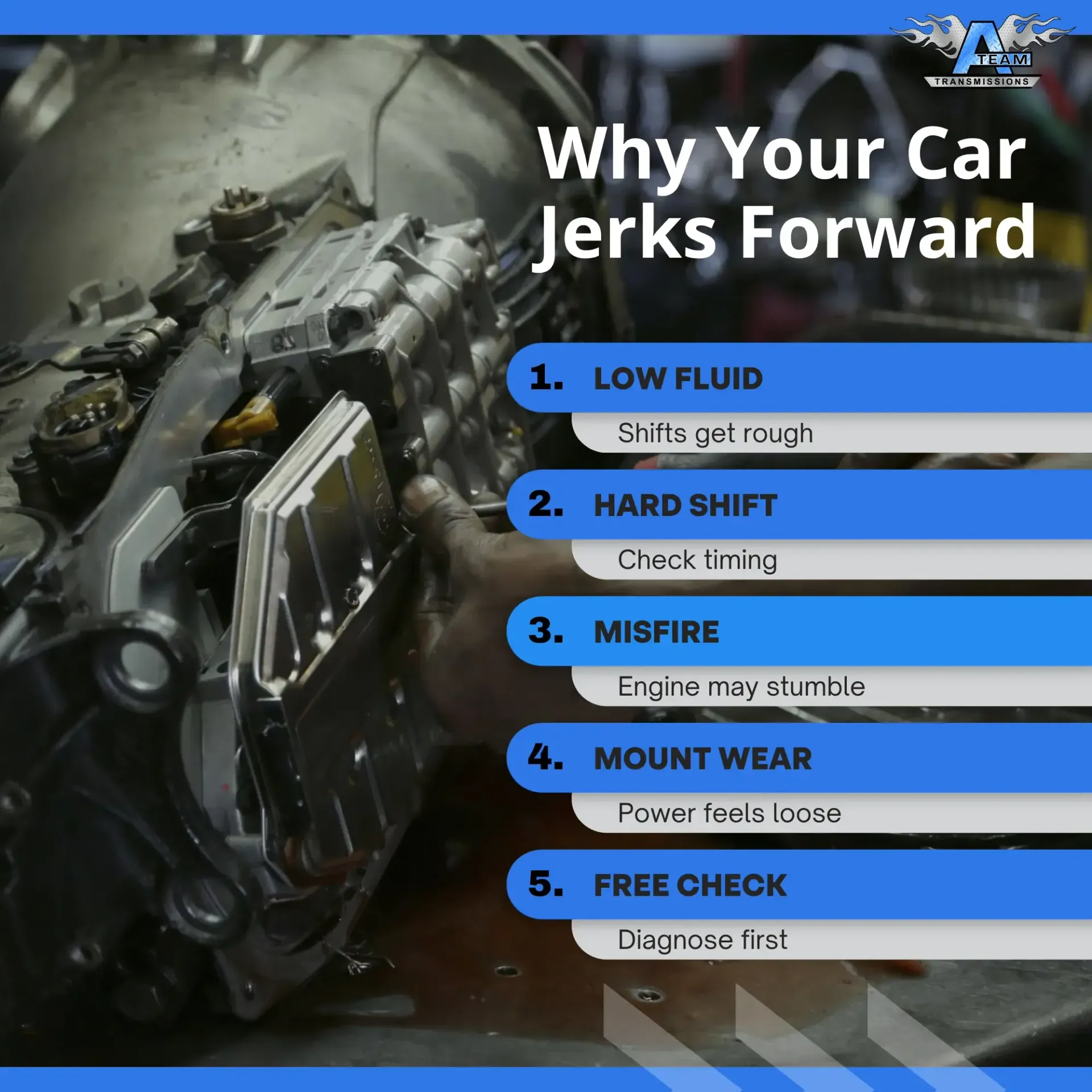
Why Your Car Jerks When Accelerating
A car jerks when accelerating because something is interrupting smooth power delivery. The cause may be inside the transmission, but it can also come from the engine, fuel system, ignition system, mounts, axles, or software controls. The timing of the jerk matters. A single hard bump during a gear change can point toward shifting concerns. A repeated stumble as the engine climbs in RPM may point toward an engine performance problem. A clunk under load may involve the driveline. That overlap is why diagnosis matters. The symptom may feel simple from the driver’s seat, but several systems can create the same rough acceleration.
Common Transmission Causes Of Jerking During Acceleration
Transmission-related jerking often appears during gear changes, takeoff, or light-to-heavy throttle changes. These are the areas where the transmission has to apply pressure, shift gears, and manage torque.
Low Or Worn Transmission Fluid
Low or worn transmission fluid can cause rough shifts, delayed engagement, slipping, or jerking. Fluid helps cool, lubricate, and create the pressure needed for proper shifting. If the fluid is low because of a leak, the problem may get worse as the vehicle warms up. A burnt smell, red or brown fluid under the vehicle, or shifting that feels harsher over time should be checked soon.
Delayed Gear Engagement
Delayed engagement happens when the vehicle pauses before moving after you shift into drive or reverse. It can also feel like a hesitation before the next gear grabs during acceleration. If your transmission jerks when accelerating after a stoplight on Morse Road, Refugee Road, or Cleveland Avenue, the transmission may not be applying smoothly. That can point to fluid pressure concerns, wear, or control issues.
Torque Converter Problems
The torque converter helps transfer engine power into the transmission. When it does not apply smoothly, the vehicle may shudder, jerk, or feel uneven under light acceleration. Some torque converter symptoms show up around steady cruising speeds. Others appear when pulling away from a stop or driving through stop-and-go traffic.
Worn Internal Transmission Parts
Internal wear can affect clutch packs, bands, seals, bearings, or other parts inside the transmission. As wear increases, the transmission may slip, shift hard, or jerk when power is applied. This is where transmission repair in Columbus, OH, should begin with testing. The goal is to confirm whether the issue is minor, serious, or part of a larger internal problem.
Software Or Control Module Issues
Modern transmissions depend on sensors, solenoids, modules, and software. If the control side is not working correctly, the transmission may shift at the wrong time or apply pressure too harshly. A software or module issue can feel mechanical even when the root cause is electronic. Proper testing helps separate internal transmission failure from a control problem.
Why Acceleration Jerks Can Feel Worse In Columbus Traffic
Columbus driving gives rough acceleration several chances to show up. Stop-and-go movement on I-71, I-70, and I-270 can make small shift problems feel more obvious. Cold mornings can also change how a transmission behaves at startup. Summer traffic near Easton, Polaris, downtown Columbus, or the Outerbelt can increase heat and make weak fluid pressure or worn parts easier to notice. A vehicle may feel fine during steady cruising but jerk during repeated takeoffs. That is why local driving details help during transmission diagnosis in Columbus, OH. Where and when the symptom happens can narrow the inspection.
How To Tell If The Problem May Not Be The Transmission
Car jerking while accelerating does not always indicate that the transmission is the cause. Other systems can create a similar feeling, especially when the vehicle hesitates, bucks, or loses power.
Engine Misfires
An engine misfire can make the vehicle jerk, shake, or stumble under acceleration. The cause may be spark plugs, ignition coils, sensors, compression problems, or other engine concerns. Misfires often feel more rhythmic than a single hard shift. A flashing check engine light should be checked quickly because continued driving can damage the catalytic converter.
Fuel Or Airflow Problems
Fuel delivery and airflow problems can cause hesitation, surging, or jerking. A weak fuel pump, clogged filter, dirty sensor, or air intake issue may keep the engine from getting what it needs under load. This can feel like a transmission issue because the vehicle struggles when you press the gas. Testing helps determine whether the power loss starts in the engine or the transmission.
Drivetrain Or Mount Issues
Loose mounts, worn axles, damaged CV joints, or driveshaft issues can create clunks and jerks under acceleration. The symptom may feel like a transmission bump, but the source may be outside the transmission. A Team Transmissions checks related driveline concerns because transmission services often overlap with clutch, differential, axle, and driveshaft symptoms.
Why Diagnosis Should Come Before Transmission Repair
A proper diagnosis protects you from replacing parts based on a guess. Acceleration jerks can come from fluid issues, internal wear, software concerns, engine problems, or driveline movement. A Team Transmissions offers free transmission diagnosis in Columbus to identify what is actually causing the concern. The process may include checking fluid condition and level, scanning for fault codes, reviewing shift behavior, inspecting related components, and confirming the symptom during operation. No repair should begin until the cause is clear. If the vehicle needs transmission repair, you should know why. If the issue points to the engine, software, mounts, or another driveline part, you should know that too.
Takeaways
A jerking feeling during acceleration can come from the transmission, engine, or drivetrain. Low fluid, delayed engagement, torque converter issues, internal wear, misfires, fuel problems, and worn mounts can all create a similar driving complaint. For Columbus, OH drivers, the right next step is not guessing from the symptom alone. A clear diagnosis helps identify the source and gives you a practical repair path before the issue becomes harder to control.
Frequently Asked Questions About A Car Jerking When Accelerating
Why does my car jerk when i press the gas?
Your car may jerk when you press the gas because the engine, transmission, or drivetrain is not delivering power smoothly. Common causes include low transmission fluid, misfires, torque converter issues, worn mounts, or shifting problems.
Does jerking during acceleration mean my transmission is bad?
Jerking during acceleration can be a transmission problem, but it does not always imply that the transmission is bad. Engine misfires, fuel problems, airflow issues, and driveline wear can create similar symptoms.
Can low transmission fluid cause jerking?
Low transmission fluid can cause jerking, slipping, hard shifts, and delayed engagement. If the fluid is low because of a leak, driving may make the problem worse.
Should I keep driving if my car jerks when accelerating?
You should limit driving if the jerking is strong, repeated, or paired with warning lights, slipping, burning smells, or fluid leaks. Schedule a diagnosis before the issue creates more damage or leaves you stranded.
How do I know if I need transmission repair?
You may need transmission repair if the vehicle jerks during shifts, slips, delays engagement, shifts hard, or struggles to stay in gear. A diagnosis is the best way to confirm whether the transmission is the source.
Get Transmission Repair Answers From A Team Transmissions In Columbus
If your car jerks when accelerating, A Team Transmissions can help you find the cause before you approve repairs. Our team provides transmission repair in Columbus, OH, along with transmission diagnostics, software programming, clutch repair, differential repair, and related driveline services. Our North Columbus location is at 6200-C Huntley Road, Columbus, OH 43229, and you can call (614) 848-8484. OurEast Columbus / Pickerington location is at 836 Refugee Road, Pickerington, OH 43147, and you can call (614) 864-9520. Schedule a free diagnosis so we can determine whether the jerk comes from the transmission, engine, software, or another connected system.
Share Us On:

Founder of
A Team Transmissions, Sean Avner, is a second-generation transmission specialist whose path began in the trade with his father, who owned an AAMCO in Decatur, GA. Before focusing on transmissions, Sean worked as a general technician at a small shop, giving him a practical view of how clear answers and honest service matter to drivers.
Since founding A Team Transmissions in March 2008, Sean has built the shop around integrity and long-term customer relationships, now serving central Ohio from locations in Columbus and Pickerington. As an ASE-certified shop, his team covers the full range of transmission and drivetrain service, from transmission diagnostics to clutch repair and replacement, with specialized experience servicing BMW and Ford transmissions including other makes and models.


