
Smoke coming from the exhaust can indicate that the engine is burning coolant, oil, or too much fuel. It can also be harmless condensation on a cold morning, but the difference depends on the color, smell, timing, and how the vehicle drives. If smoke keeps coming back, gets heavier, or appears with rough running, hesitation, or a warning light, the safest next step is engine diagnosis in Columbus, OH.
A Team Transmissions checks the full pattern before recommending repairs, especially when engine symptoms may overlap with transmission or drivability concerns.
What Smoke Coming from Exhaust Usually Means
Smoke from the exhaust usually means something is entering the combustion process or exhaust stream that should not be there. The color gives the first clue, but it does not give the full answer. A little vapor during a cold Ohio morning can be normal. Heavy smoke after the vehicle is warm is different. So is smoke that smells sweet, oily, or fuel-rich. Drivers around Columbus may notice exhaust smoke while idling at a light, accelerating onto I-270, or starting the car after it sat outside overnight. Pay attention to when it happens. That detail can help narrow the diagnosis.
What Exhaust Smoke Color Can Tell You
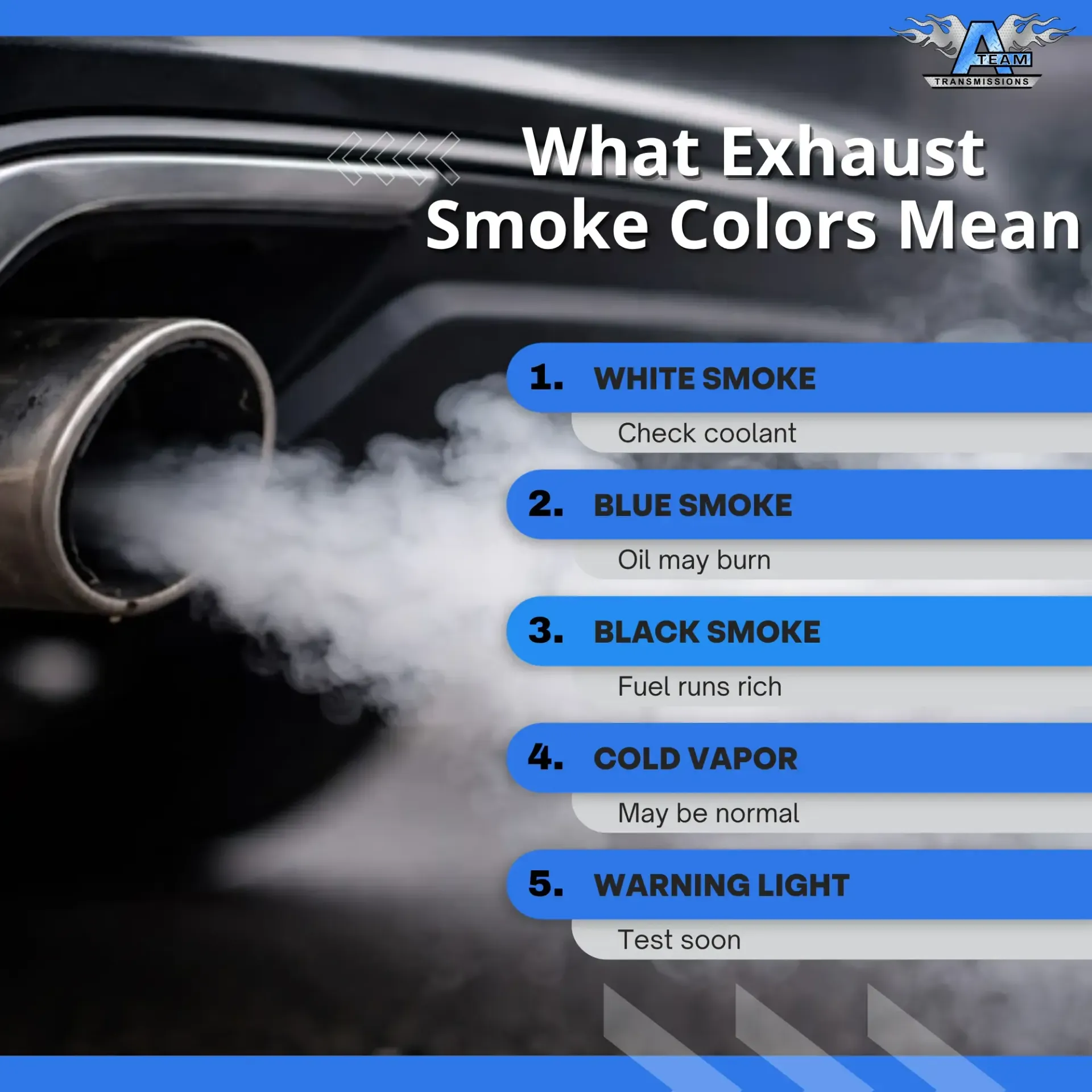
Exhaust smoke color helps point the inspection in the right direction. The main colors to watch are white, blue, and black.
White Smoke Can Point to Coolant or Condensation
White smoke from the exhaust may be normal condensation if it disappears quickly after startup. This is common during cold mornings in Columbus, especially after the vehicle sits overnight. Thick white smoke that continues after warm-up can point to coolant entering the combustion chamber. A sweet smell, overheating, or dropping coolant level makes the issue more serious.
Blue Smoke Can Point to Oil Burning
Blue smoke from exhaust usually means oil is being burned inside the engine. This can happen because of worn valve seals, piston rings, PCV system issues, or other internal engine concerns. Blue smoke may appear at startup, during acceleration, or after idling. If the oil level keeps dropping between services, the engine should be checked before the problem worsens.
Black Smoke Can Point to Fuel or Airflow Problems
Black smoke often means the engine is running too rich, which means it may be using too much fuel or not getting the right airflow. Possible causes include sensor faults, fuel delivery issues, air intake problems, or control system concerns. Black smoke may also come with poor fuel economy, rough idle, fuel smell, or weak acceleration. These signs fit well with engine diagnostics and repair in Columbus, OH, because testing can show whether the issue is fuel, spark, airflow, or electrical control related.
Why Columbus Driving Conditions Can Make Smoke More Noticeable
Columbus driving can make engine problems easier to spot. Cold starts in winter, humid summer traffic, pothole season, and repeated stop-and-go driving all affect how a vehicle behaves. A vehicle may smoke more during a cold start near Worthington, then seem normal by the time it reaches I-71. Another vehicle may run fine on short trips but smoke after sitting in traffic near Easton, downtown Columbus, or Refugee Road. Long commutes from Pickerington, Gahanna, Hilliard, or Grove City can also reveal patterns. Smoke during acceleration may show up more clearly on highway ramps, while idle-related smoke may appear at stoplights or in drive-thru lines.
When Exhaust Smoke Needs Prompt Engine Diagnosis
Exhaust smoke should be checked soon when it repeats, gets heavier, or appears with other symptoms. The smoke itself is only one part of the concern.
Smoke Continues After Warm-Up
Smoke that disappears fast may only be condensation. Smoke that continues after the engine warms up deserves attention. This is especially true if the smoke is thick, smells unusual, or leaves a visible trail behind the vehicle. Continuing to drive may allow overheating, oil loss, or fuel-related problems to get worse.
Smoke Comes with Rough Running or Power Loss
Smoke paired with rough idle, hesitation, stalling, misfires, or poor acceleration points to a drivability problem. The engine may not be burning fuel correctly, or another system may be affecting performance. Some issues can feel like transmission trouble because the vehicle hesitates, surges, or struggles under load. That is why transmission services in Columbus may still matter when symptoms overlap. The goal is to identify whether the problem starts in the engine, transmission, or another connected system.
Smoke Appears with Warning Lights or Fluid Loss
A check engine light, overheating warning, low oil level, or dropping coolant level should move the issue higher on your list. Smoke plus fluid loss often means the vehicle needs testing before more driving. Watch for coolant loss, oil consumption, burning smells, or fluid spots under the vehicle. These signs help the technician understand what may be entering the exhaust stream.
How Engine Diagnostics Help Find the Cause
Engine diagnostics help identify whether the smoke is related to coolant, oil, fuel, airflow, ignition, sensors, wiring, or module control. A code scan can help, but it is only the beginning. A Team Transmissions may begin by reviewing the symptom pattern and checking stored and pending codes. The team may also examine live data, inspect fluid levels, road-test the vehicle, and evaluate related systems. If the concern includes hesitation or shifting complaints, the diagnostic process can also help separate engine performance issues from transmission behavior.
Frequently Asked Questions About Exhaust Smoke
Is smoke from the exhaust always bad?
Smoke from the exhaust is not always bad. Light vapor that disappears right away on a cold morning is often condensation, but thick or repeated smoke should be checked.
What does white smoke from exhaust mean?
White smoke from the exhaust may be condensation if it fades after startup. Thick white smoke that continues after warm-up may point to coolant entering the combustion chamber.
What does blue smoke from exhaust mean?
Blue smoke from exhaust usually means the engine is burning oil. The cause may involve valve seals, piston rings, a PCV issue, or another internal engine concern.
Can engine smoke feel like a transmission problem?
Yes, some engine problems can feel like transmission issues. Poor acceleration, hesitation, surging, or weak power may make the vehicle feel like it is shifting poorly, even when the engine is the starting point.
Should I drive if my exhaust is smoking?
You should limit driving if the smoke is heavy, continuous, or paired with overheating, warning lights, rough running, or fluid loss. Schedule a diagnosis before the issue causes more damage.
Schedule Engine Diagnosis with A Team Transmissions in Columbus
If you see smoke coming from the exhaust, A Team Transmissions can help you understand what is causing it. Our team provides engine diagnosis in Columbus, OH, along with transmission diagnostics and related drivetrain support when symptoms overlap. Our North Columbus location is at 6200-C Huntley Road, Columbus, OH 43229, and you can call (614) 848-8484. Our East Columbus / Pickerington location is at 836 Refugee Road, Pickerington, OH 43147, and you can call (614) 864-9520. Schedule testing so we can determine whether the smoke is related to coolant, oil, fuel, airflow, or another drivability issue.
Share Us On:

Founder of
A Team Transmissions, Sean Avner, is a second-generation transmission specialist whose path began in the trade with his father, who owned an AAMCO in Decatur, GA. Before focusing on transmissions, Sean worked as a general technician at a small shop, giving him a practical view of how clear answers and honest service matter to drivers.
Since founding A Team Transmissions in March 2008, Sean has built the shop around integrity and long-term customer relationships, now serving central Ohio from locations in Columbus and Pickerington. As an ASE-certified shop, his team covers the full range of transmission and drivetrain service, from transmission diagnostics to clutch repair and replacement, with specialized experience servicing BMW and Ford transmissions including other makes and models.


