
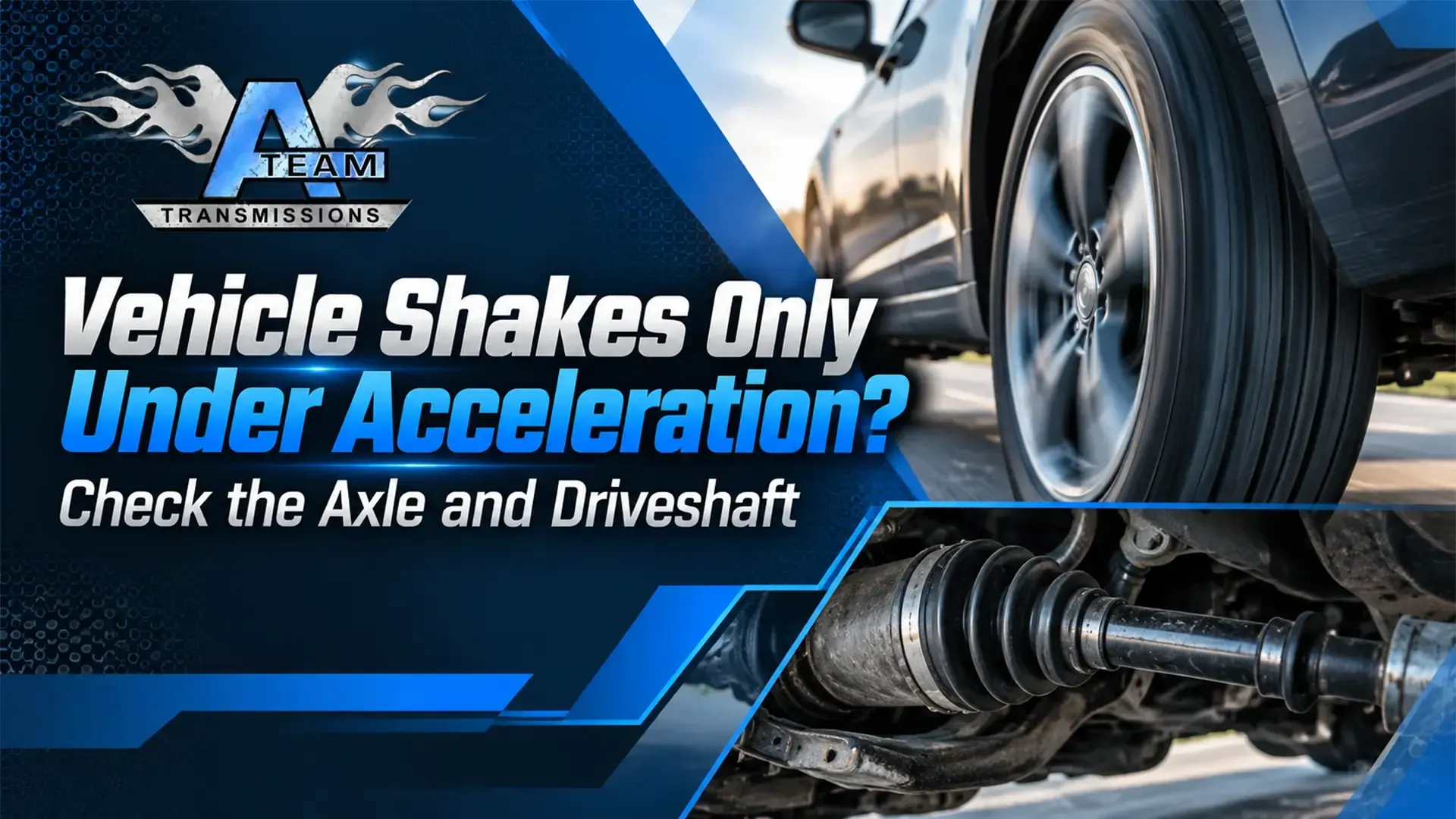
When a vehicle shakes under acceleration but smooths out as you lift off the throttle, the pattern often points to a component that changes under engine load. Worn inner CV joints, loose U-joints, driveshaft runout, or excess axle play can all cause this type of vibration.
However, the symptom alone does not confirm that the axle or driveshaft has failed. Tires, engine or transmission mounts, differentials, transfer cases, and transmission problems can sometimes create similar symptoms.
At A Team Transmissions, we compare how the vibration changes with vehicle speed and throttle input to help narrow down the source. Our driveshaft vibration diagnosis checks the full driveline before any repair is recommended.
Common Axle and Driveshaft Problems
Axle and driveshaft problems often create repeatable patterns under load. The right starting point depends on whether the vehicle uses front-wheel, rear-wheel, all-wheel, or four-wheel drive.
Worn Inner CV Joints
A worn inner CV joint can shudder as torque passes through the axle. This CV axle vibration may ease while coasting. An outer CV joint more often clicks during tight turns, while a torn boot may leave grease near the wheel.
Driveshaft Imbalance or Runout
A bent or imbalanced driveshaft can vibrate as speed rises. Worn connections or incorrect operating angles may make it stronger under power. Columbus potholes and winter freeze-thaw damage can expose developing wear.
Worn U-Joints or a Center Support Bearing
Worn U-joints can add looseness, clunks, and vibration as torque changes. A two-piece driveshaft may also have a worn center support bearing. A thump when selecting drive or reverse can appear first.
Axle Shaft and Mounting Problems
A bent axle shaft, damaged splines, loose hardware, or excess bearing play can disturb rotation. Modified ride height can change driveline angles. These faults require measurements, not feel alone.
Other Problems That Can Feel Similar
Several systems can imitate an axle or driveshaft shake. A complete transmission and drivetrain service evaluation helps keep the repair focused on the part that is actually causing the symptom.
Tire and Wheel Vibration
Tire imbalance usually follows road speed and remains while you coast. Bent wheels and uneven tread can also shake the vehicle. Our guide to drivetrain problems and uneven tire wear explains why an inspection may extend beyond the tires.
Differential, Transfer Case, or Transmission Concerns
A differential may whine, clunk, leak, or feel rough as load changes. Our differential diagnosis and repair process compares those clues with axle and driveshaft behavior. A shake tied to one shift, gear, or torque-converter lockup also calls for transmission testing, while four-wheel-drive systems may require a transfer-case check.
Engine and Transmission Mount Movement
Worn engine or transmission mounts can create a thump or make an existing vibration more noticeable as torque increases. In 4x4 vehicles, including Jeep SUVs, driveline movement under load can make these symptoms easier to notice. During Jeep transmission repair in Columbus, OH, we also check whether mounts or other driveline components are contributing to the vibration.
Clues to Record Before an Inspection
Record the speed, gear, and throttle level when the shake begins. Note whether it happens from a stop, on an I-70 ramp, or near 60 mph on I-270, and whether coasting stops it. Mention recent pothole hits, suspension work, tire replacement, towing, or ride-height changes.
Keep your observations limited to what you can safely notice while driving. Do not crawl under the vehicle unless it is properly lifted and supported with equipment designed for the job.
When to Stop Driving
Stop driving when the vibration becomes severe, control changes, or the vehicle clunks, grinds, or loses drive. Move off the road safely and arrange a tow if the vehicle feels unstable. A mild, unchanged vibration may allow a short trip for inspection, but do not keep testing it in traffic.
The Ohio BMV provides the official Ohio Driver Manual for state driving guidance and safe road behavior.
How We Diagnose an Acceleration Vibration
We reproduce the complaint on a road test when conditions allow. Then we inspect CV joints, axle play, U-joints, driveshaft runout, yokes, support bearings, mounts, leaks, and wheel-end parts.
We compare the findings with the drive system and repair history. This separates a CV joint shudder from tire, differential, transfer-case, or transmission concerns before we discuss driveshaft repair in Columbus, OH.
Takeaways
A vehicle that shakes only under acceleration may have an inner CV joint, driveshaft, U-joint, axle, bearing, or mount problem. Tires, differentials, transfer cases, and transmissions can feel similar, so the throttle pattern is only a clue.
Record when the shake starts and whether coasting stops it. Arrange prompt inspection if it grows stronger, adds clunks or grinding, or affects control.
Frequently Asked Questions
Can a bad CV axle make a car shake only during acceleration?
Yes, a worn inner CV joint can make a car shudder during acceleration. The vibration may lessen when you release the throttle, but an inspection is needed because mounts and other driveline parts can create a similar pattern.
How can I tell a driveshaft vibration from a tire vibration?
A driveshaft vibration may change with throttle load, while tire vibration usually follows road speed and often remains during coasting. These patterns are useful clues, but a road test and inspection are needed to identify the rotating part involved.
Is it safe to drive when the vehicle shakes under load?
A short drive may be possible if the vibration is mild and the vehicle remains stable. Stop and arrange assistance if the shaking becomes severe, control changes, or you hear clunking or grinding.
Can a transmission problem cause the same symptom?
Yes, a transmission or torque-converter concern can create a shudder that feels like driveline vibration. Timing matters because a shake during a particular shift or lockup event points to different tests than a vibration tied only to road speed and throttle.
What will a driveline inspection include?
A driveline inspection may include a road test plus checks of CV joints, axles, U-joints, driveshaft runout, yokes, support bearings, mounts, leaks, and wheel-end parts. We adjust the inspection to the vehicle's drive system and the exact conditions that reproduce the shake.
Schedule Axle and Driveshaft Service in Columbus
If your vehicle shakes during acceleration, schedule an axle and driveshaft inspection with A Team Transmissions. We can reproduce the symptom, inspect the driveline, and explain what we find before recommending repairs.
Choose the location that works best for you. For service in North Columbus, visit
6200-C Huntley Road, Columbus, OH 43229 or call
(614) 848-8484 to schedule. If Pickerington is more convenient, visit
836 Refugee Rd, Pickerington, OH 43147 or call
(614) 864-9520 to book your inspection.
Why a Vehicle Shakes Under Acceleration
Acceleration loads the driveline as torque moves to the wheels. Wear or looseness may surface only under that force, then fade during steady cruising or coasting. A car vibration when accelerating may reach the floor, seat, or steering wheel, but testing is needed to confirm its source.
Share Us On:

Founder of
A Team Transmissions, Sean Avner, is a second-generation transmission specialist whose path began in the trade with his father, who owned an AAMCO in Decatur, GA. Before focusing on transmissions, Sean worked as a general technician at a small shop, giving him a practical view of how clear answers and honest service matter to drivers.
Since founding A Team Transmissions in March 2008, Sean has built the shop around integrity and long-term customer relationships, now serving central Ohio from locations in Columbus and Pickerington. As an ASE-certified shop, his team covers the full range of transmission and drivetrain service, from transmission diagnostics to clutch repair and replacement, with specialized experience servicing BMW and Ford transmissions including other makes and models.


