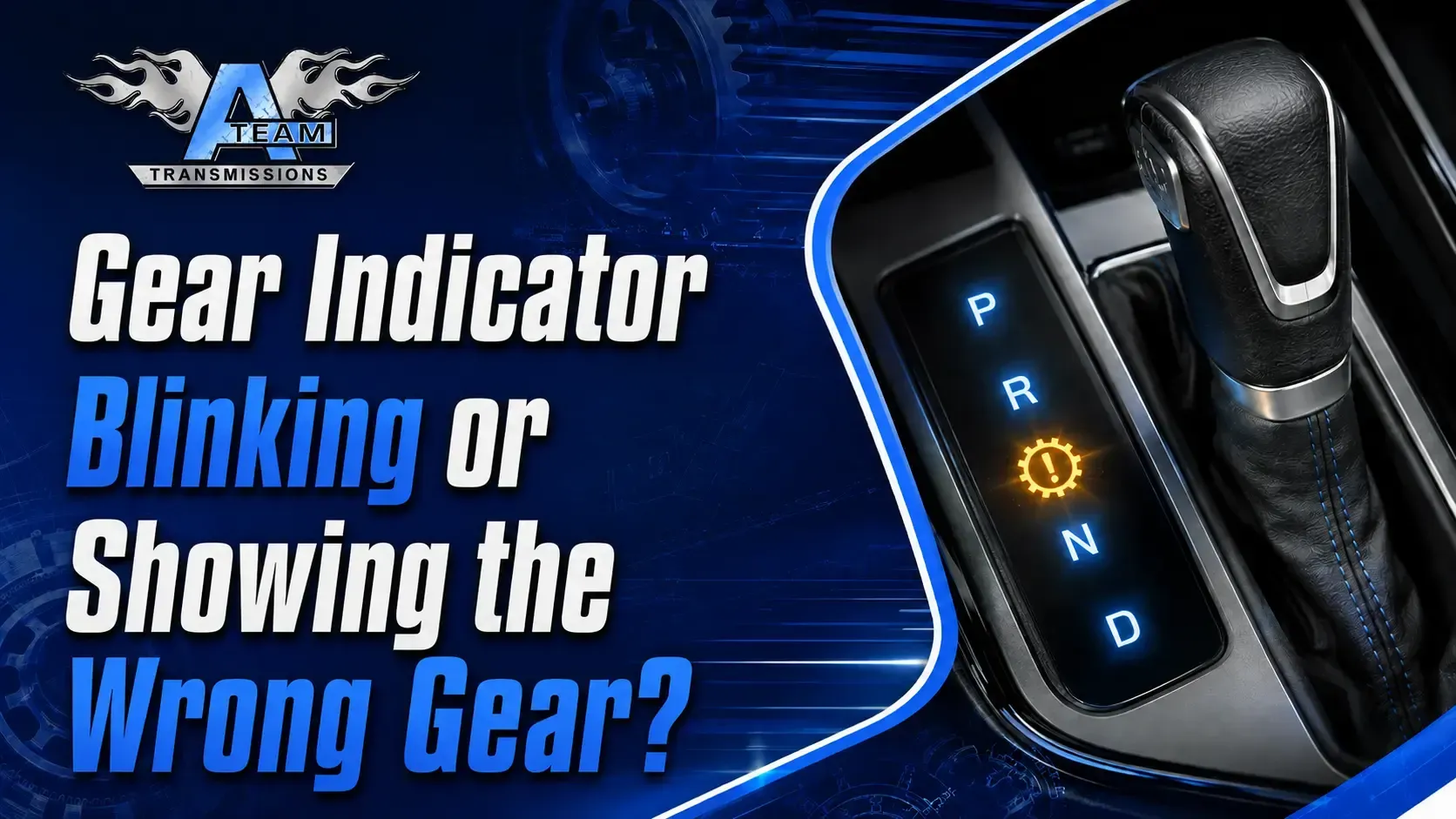
A blinking gear indicator can mean your vehicle detected a transmission or shift-control problem. If you also have a gear indicator showing the wrong gear, treat the mismatch as a safety concern. The vehicle may not be in the range you expect, which can affect how it responds. Prompt transmission diagnostics in Columbus, Ohio, can separate a sensor, wiring, shifter, software, or internal fault before anyone recommends a repair.
At A Team Transmissions, we compare what you selected with what the transmission and control modules report. That full picture matters because a dash symbol alone cannot identify the failed part.
Common Causes of an Incorrect Gear Display
The most common causes involve position sensing, the shifter mechanism, electrical power, module communication, or a transmission fault. The symptom does not confirm which one has failed.
Transmission Range Sensor or Selector Fault
A transmission range or selector sensor tells the vehicle which gear you requested. Wear, poor adjustment, contamination, or an internal electrical fault can make its signal disagree with the shifter position. You may also notice a no-start condition in Park, missing reverse lights, or harsh engagement.
Shifter Cable or Linkage Problem
A stretched, loose, or damaged shifter cable can keep the lever and transmission from lining up. Shift-by-wire vehicles use switches and actuators instead of a traditional cable, so the same symptom can have an electronic cause. Do not force a selector that feels stuck or unusually loose.
Low Voltage, Wiring, or Connector Trouble
Low system voltage or an unstable electrical connection can disrupt gear-position data. A weak battery, charging problem, damaged wire, loose ground, or corroded connector may cause intermittent warnings. Cold Central Ohio mornings can expose a marginal battery, while road salt and moisture can add connector concerns over time.
Control Module or Software Fault
A control module may lose communication, store a fault, or need correct configuration after certain repairs. Modern transmissions share data with the engine, brake, and body systems, so one network problem can affect several messages. Proper transmission software and module programming begins with testing, not an automatic software update.
Hydraulic or Internal Transmission Problem
The display may blink because the transmission cannot achieve the commanded gear. Low fluid from a leak, a pressure-control problem, a solenoid fault, clutch wear, or internal damage can create that mismatch. Slipping, delayed movement, hard shifts, or a burning smell make this cause more likely, but testing still comes first.
Is It Safe to Drive With the Wrong Gear Display?
Do not keep driving if the vehicle moves in an unexpected direction, will not stay in Park, loses drive, or shifts harshly. Stop in a safe place, apply the parking brake, and request a tow if you cannot confirm the selected range. If you must stop near traffic, review Ohio Driver Manual resources and your vehicle manual for safe breakdown steps.
A blinking indicator without a change in driving may still require prompt service. Avoid hard acceleration, high speeds, towing, and a long run on I-270 or I-71 until you know what the warning means. Follow any red warning or “stop safely” message immediately.
What to Check Before Scheduling Service
You can record useful details without taking the vehicle apart or clearing fault codes. Keep your foot on the brake and set the parking brake before comparing the selector with the dash.
- Write down the exact gear symbol, color, and message.
- Note whether the problem appears cold, hot, or after hitting a bump.
- Record any delayed engagement, slipping, noise, odor, or fluid under the vehicle.
- Check the owner’s manual for model-specific instructions.
- Take a short video only while the vehicle is safely parked.
Do not disconnect the battery just to turn the warning off. That can erase useful data or reset adaptive settings without fixing the cause. Do not add transmission fluid unless you know the correct fluid, level procedure, and leak condition for that vehicle.
How Diagnostics Pinpoint the Fault
A complete diagnosis compares codes, live data, physical shifter position, wiring condition, voltage, fluid condition, and actual shift behavior. A technician can see whether the range sensor input changes correctly and whether the commanded gear matches the gear ratio reported during operation.
A Team Transmissions uses that information to separate an adjustment or electrical repair from a control-side or internal problem. If testing finds wider damage, our guide to whether you should repair, rebuild, or replace a transmission explains how those paths differ. Drivers from Westerville, Gahanna, Reynoldsburg, and Canal Winchester can use either Columbus-area shop based on which route is easier.
Takeaways
Treat a blinking gear indicator as a fault message, not a cosmetic display problem. A gear mismatch, unexpected movement, loss of Park, harsh shifting, or loss of drive calls for a safe stop and professional help.
The cause may be a range sensor, linkage, low voltage, wiring, software, or the transmission itself. Preserving the warning details and stored codes gives the technician better evidence for an accurate next step.
Frequently Asked Questions
Why is my D light blinking?
A blinking D light often means the vehicle detected a transmission-system fault. The exact meaning depends on the model, so avoid hard acceleration and follow the owner’s manual while arranging diagnosis.
Can a weak battery cause gear indicator problems?
Yes, low or unstable voltage can affect sensors, modules, and network communication. A battery and charging-system test can confirm whether voltage is part of the problem, but it should not replace transmission testing.
Why does the display show reverse while the shifter is in park?
The vehicle may be receiving the wrong selector-position signal or the linkage may be out of adjustment. Keep the parking brake applied and do not rely on Park until the actual range is confirmed.
Can a bad transmission range sensor show the wrong gear?
Yes, a faulty or misadjusted range sensor can report a gear that differs from the selector position. Testing must also rule out linkage, wiring, connector, and module faults that can create the same symptom.
Will restarting the car clear a blinking gear indicator?
Restarting may make an intermittent warning disappear, but it does not prove the fault is gone. Record the symptom and schedule testing if the light returns, the display stays wrong, or shifting changes.
Schedule Gear Indicator Diagnostics in Columbus
Our team can check a blinking D light, wrong gear display, or related shift complaint before repairs are chosen. Contact A Team Transmissions to schedule at 6200-C Huntley Road, Columbus, OH 43229, at (614) 848-8484, or 836 Refugee Road, Pickerington, OH 43147, at (614) 864-9520.
What a Blinking Gear Indicator Means
A blinking gear indicator usually means the vehicle detected a fault, but the exact message varies by make and model. Some Honda vehicles flash the D indicator when the transmission system reports a problem. Other vehicles may blink the selected gear, show several positions, or display a separate transmission warning light.
A steady display that shows the wrong position is different from a brief shift recommendation. If the lever is in Park but the cluster shows Reverse, the system may be receiving incorrect position data. Check the owner’s manual for the exact symbol, wording, and action for your vehicle.
Share Us On:

Founder of
A Team Transmissions, Sean Avner, is a second-generation transmission specialist whose path began in the trade with his father, who owned an AAMCO in Decatur, GA. Before focusing on transmissions, Sean worked as a general technician at a small shop, giving him a practical view of how clear answers and honest service matter to drivers.
Since founding A Team Transmissions in March 2008, Sean has built the shop around integrity and long-term customer relationships, now serving central Ohio from locations in Columbus and Pickerington. As an ASE-certified shop, his team covers the full range of transmission and drivetrain service, from transmission diagnostics to clutch repair and replacement, with specialized experience servicing BMW and Ford transmissions including other makes and models.


