
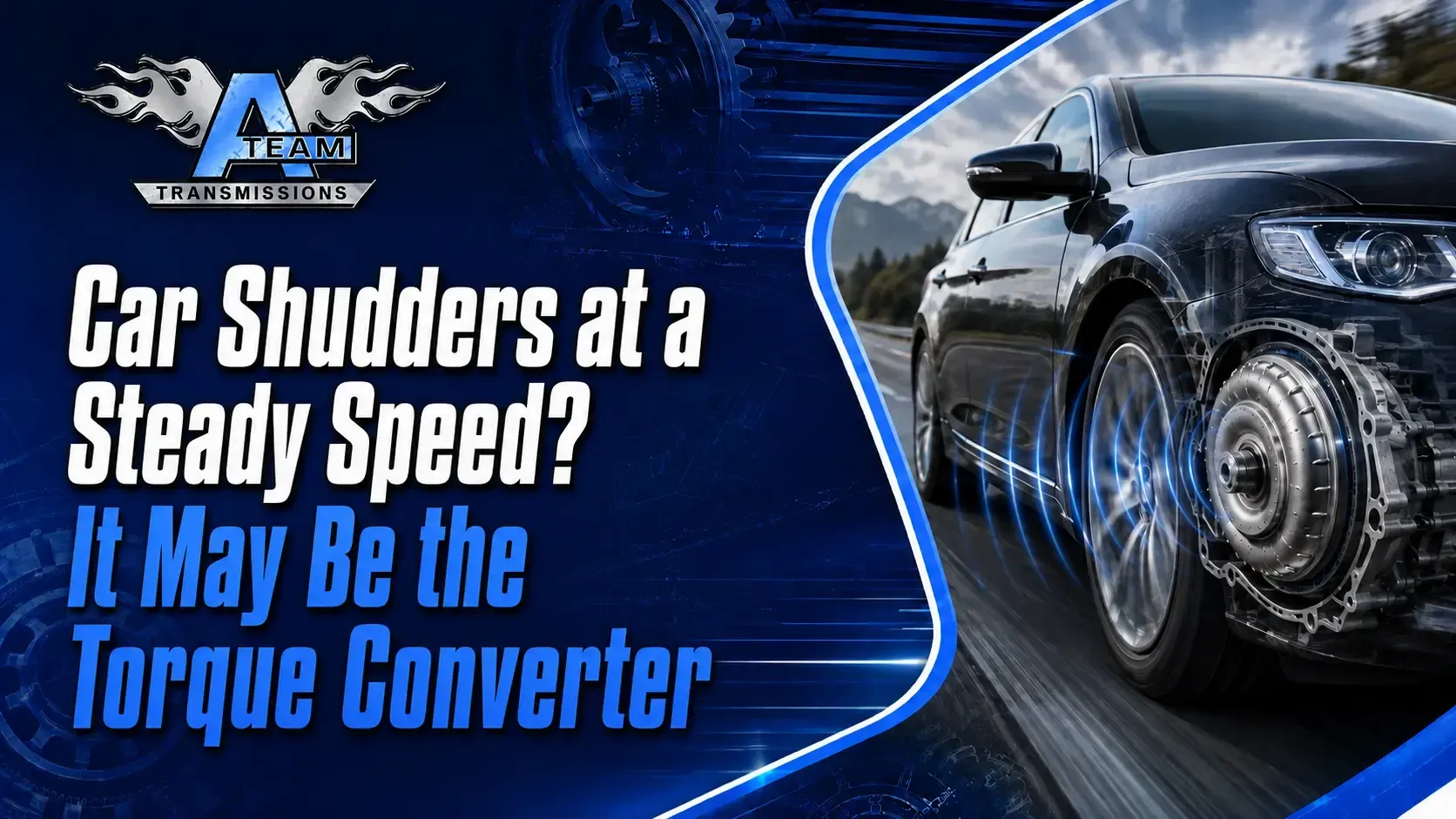
A steady-speed vibration can be a sign of torque converter shudder, especially when it feels like driving over a rumble strip. The sensation often appears as the transmission tries to lock the converter during light throttle.
Because tires, engine misfires, and driveline parts can feel similar, a transmission diagnosis in Columbus, OH, should confirm the cause before parts are replaced.
How the Lockup Clutch Can Create a Shudder
The torque converter transfers engine power to an automatic transmission through fluid. At cruising speed, its lockup clutch creates a more direct connection to reduce heat and wasted energy.
Worn clutch material, contaminated fluid, hydraulic pressure problems, or control issues can interrupt that smooth connection. The resulting vibration may point toward the converter, valve body, solenoids, or another part covered by transmission and drivetrain service.
Why the Symptom Often Appears at a Steady Speed
The symptom often appears at a steady speed because that is when many vehicles command converter lockup. You may feel it during gentle cruising, then notice it fade when you accelerate or let off the gas.
A transmission shudder at highway speed may be easy to notice on I-270 or I-71, where the vehicle holds a narrow speed range. Stop-and-go traffic may hide the problem because the converter does not remain locked for long.
What Does a Torque Converter Shudder Feel Like?
A torque converter shudder often feels like a rapid shake, flutter, or rumble-strip vibration through the seat and floor. It usually happens under light throttle rather than during every gear change.
Other bad torque converter symptoms may include slipping, delayed movement, unusual heat, or engine speed that changes without a matching change in road speed. Those signs can also have other causes, so the symptom alone does not prove the converter has failed.
Could the Vibration Come From Something Else?
Yes, several engine, tire, wheel, and driveline problems can copy a converter shudder. The speed, throttle position, engine load, and location of the vibration help separate the possibilities.
Engine and Ignition Problems
An engine misfire can shake the vehicle under light load and may feel like a transmission problem. Worn spark plugs, weak ignition coils, fuel delivery faults, or air-metering problems may cause hesitation and vibration.
Tires, Wheels, and Driveline Parts
An out-of-balance tire usually vibrates at a certain road speed, even when you lift off the accelerator. Worn CV joints, U-joints, driveshaft parts, wheel bearings, or engine mounts can also create speed-related shaking.
Central Ohio potholes and freeze-thaw cycles can make tire and suspension vibrations more common. A car shudders at steady speed for many reasons, so testing matters more than the driver's first guess.
How a Transmission Shop Diagnoses the Shudder
A proper diagnosis recreates the symptom and compares it with scan data, fluid condition, and mechanical checks. At A Team Transmissions, technicians can road-test the vehicle and watch torque converter clutch operation in real time.
The scan may show converter slip speed, clutch commands, temperature, shift behavior, and stored fault codes. A technician may also check fluid level and condition, inspect for leaks, and rule out an engine misfire or driveline vibration.
Details help. Note whether the shake occurs cold or hot, its speed range, the gear, and whether slight brake or throttle input changes it. A cold Columbus morning may produce a different pattern than an August drive on I-70.
Can Torque Converter Shudder Be Repaired?
Yes, torque converter shudder can often be repaired, but the correct repair depends on what testing finds. Some vehicles need the specified fluid service or a software update, while others need a converter, valve body, or internal transmission work.
Fluid is not a universal cure. If worn friction material or metal has spread through the unit, a fluid change alone cannot restore damaged parts. The shop may need to inspect the cooler circuit and related components before recommending repair, rebuild, or replacement.
For context, the shop's guide to transmission repair, rebuild, or replacement explains why the amount of internal damage changes the repair path. Diagnosis should come before any decision about torque converter repair in Columbus, OH.
When Should You Stop Driving?
Stop driving when the shudder becomes severe or appears with slipping, a burning smell, overheating, a major leak, or loss of drive. Move out of traffic only when you can do so safely, then arrange towing if the vehicle no longer responds normally.
A mild, repeatable vibration still deserves prompt testing. Continued clutch slip can create heat and spread material through the transmission. Ohio drivers can also keep the Ohio Driver Manual available as a general road-safety reference.
Takeaways
Torque converter shudder often appears during light-throttle cruising when the lockup clutch tries to engage. It may feel like a rumble strip, but an engine misfire, tire problem, or worn driveline part can produce a similar shake.
Record when the symptom happens and have it tested before choosing a repair. Early diagnosis can show whether the cause is fluid, controls, the converter, or another system.
Frequently Asked Questions
Can low transmission fluid cause a shudder?
Yes, low transmission fluid can contribute to shuddering by reducing hydraulic pressure and lubrication. The leak or condition that caused the low level also needs to be found.
Does a torque converter shudder trigger a warning light?
Sometimes, a torque converter shudder triggers a check engine or transmission warning light. A vehicle may also shudder without setting a visible warning, so scan data and a road test still matter.
Will a transmission fluid change fix the shudder?
A transmission fluid change may fix the shudder if degraded or incorrect fluid is causing the problem. It will not repair worn converter friction material, internal damage, or a mechanical pressure problem.
Is torque converter shudder worse when the vehicle is warm?
It can be worse when warm because fluid viscosity and operating pressure change with temperature. Some faults appear cold instead, which is why the technician should know when the vibration starts.
How soon should I have a steady-speed shudder checked?
Have a new, repeatable shudder checked soon, especially if it is getting stronger. Prompt testing can limit heat and help prevent a smaller fault from affecting more components.
Schedule a Torque Converter Diagnosis in Columbus
A Team Transmissions can identify whether the shake comes from the torque converter, another transmission part, or a different vehicle system. Use the A Team Transmissions contact page to schedule at the location that fits your route.
For North Columbus, visit 6200-C Huntley Road, Columbus, OH 43229, or call (614) 848-8484. For East Columbus, visit 836 Refugee Road, Pickerington, OH 43147, or call (614) 864-9520.
What Causes Torque Converter Shudder?
Torque converter shudder usually starts when the converter's lockup clutch cannot engage smoothly. It may grab, slip, and grab again within seconds, sending a vibration through the vehicle.
Share Us On:

Founder of
A Team Transmissions, Sean Avner, is a second-generation transmission specialist whose path began in the trade with his father, who owned an AAMCO in Decatur, GA. Before focusing on transmissions, Sean worked as a general technician at a small shop, giving him a practical view of how clear answers and honest service matter to drivers.
Since founding A Team Transmissions in March 2008, Sean has built the shop around integrity and long-term customer relationships, now serving central Ohio from locations in Columbus and Pickerington. As an ASE-certified shop, his team covers the full range of transmission and drivetrain service, from transmission diagnostics to clutch repair and replacement, with specialized experience servicing BMW and Ford transmissions including other makes and models.


