
A new whining sound can make a normal drive feel uncertain fast. If you have a car making a whining noise in gear, the sound may point to a transmission, drivetrain, clutch, or fluid-related issue. The right first move is not guessing. It is getting a clear diagnosis before the problem grows.
A Team Transmissions helps Columbus-area drivers sort out transmission and drivetrain concerns with a free diagnosis. If the noise happens in drive, reverse, during acceleration, or while shifting, it is worth checking before daily driving makes it worse.
Why Is Your Car Making a Whining Noise in Gear?
A whining noise in gear usually means something is creating extra friction, pressure, or load while the vehicle is moving power through the drivetrain. The pitch may rise with speed, change during shifts, or appear only under acceleration.
Some noises are minor at first. Others can be early warnings of fluid problems, bearing wear, pump strain, or internal transmission trouble. On busy Columbus routes like I-270, I-71, and I-70, a small noise can quickly become more stressful when the vehicle starts slipping, hesitating, or shifting differently.
Common Causes of a Whining Noise in Gear
A whining sound does not always come from the same place. The pattern of the noise, when it happens, and how the vehicle responds all help narrow down the cause.
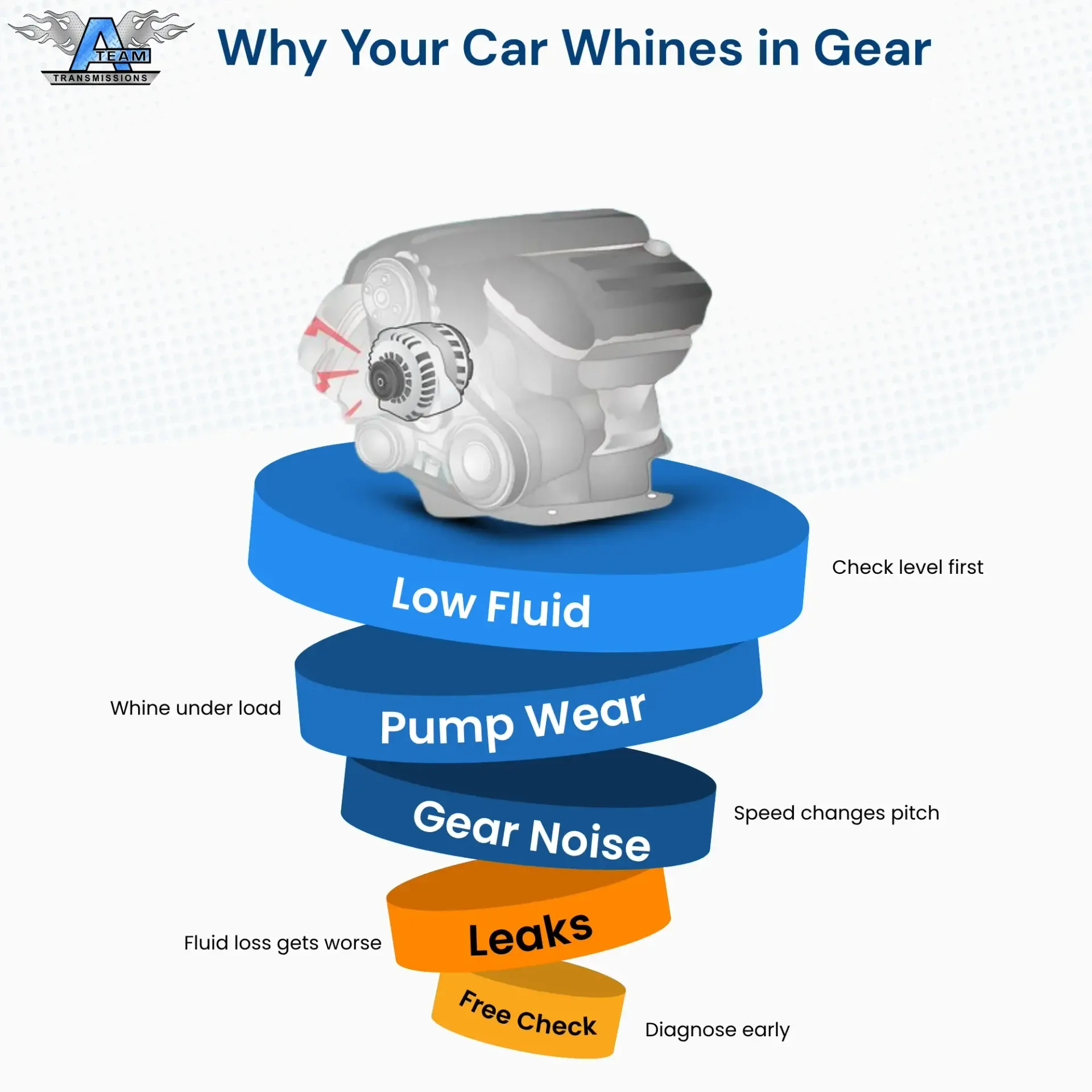
Low or worn transmission fluid
Transmission fluid helps cool, lubricate, and create pressure inside the transmission. If the fluid is low, old, contaminated, or leaking, the transmission may begin to whine as parts work with less protection.
You may also notice delayed engagement, rough shifts, slipping, or a burnt smell. A small leak under the vehicle can become a bigger issue if the fluid level drops enough to affect pressure.
Transmission pump or internal wear
A transmission whining noise can come from the pump or internal parts that are starting to wear. The pump helps move fluid through the transmission, so a problem there can change how the vehicle sounds and shifts.
Internal wear may show up as a whine that gets louder with speed or load. If the vehicle also feels weak, delayed, or harsh during shifts, diagnosis should not wait.
Torque converter concerns
The torque converter helps transfer engine power into the transmission. When it starts to fail or struggles to apply smoothly, drivers may hear whining, feel shuddering, or notice odd behavior while accelerating.
This can be easy to confuse with other transmission problems. Testing helps separate torque converter concerns from fluid, pump, solenoid, or internal mechanical issues.
Differential or drivetrain noise
Not every whine comes from the transmission itself. A differential, axle, bearing, or other drivetrain component can also create a whining sound, especially when the pitch changes with road speed.
This is common when drivers hear the sound from underneath the vehicle rather than directly from the engine bay. A Team Transmissions checks drivetrain-related concerns as part of the diagnostic process so the repair path matches the real source.
Clutch or manual transmission issues
Manual transmission drivers may hear whining from worn bearings, clutch-related parts, low fluid, or gear wear. If the sound changes when you press the clutch pedal, shift gears, or accelerate, those details matter.
Do not ignore grinding, clutch slipping, pedal changes, or trouble getting into gear. Those signs can help identify whether the issue is clutch-related, transmission-related, or both.
How Columbus Driving Can Make Whining Noises Easier to Notice
Central Ohio driving puts vehicles through a substantial amount of temperature swings and traffic patterns. A cold morning in January can make fluid thicker at startup, while summer traffic near Polaris, Easton, or downtown Columbus can increase heat inside the drivetrain.
Stop-and-go driving along Morse Road, Refugee Road, Cleveland Avenue, or the Outerbelt also gives the transmission more chances to shift, engage, and work under load. That is often when a faint whine becomes easier to hear.
For local drivers, transmission diagnosis in Columbus, OH should include more than a quick code scan. The vehicle may need a fluid check, live data review, road test, and careful listening to when the sound appears.
When a Whining Noise Needs Fast Attention
Some noises can be monitored briefly. Others need service soon. The more the sound changes, repeats, or appears with drivability problems, the more urgent it becomes.
The sound changes with speed
A whine that rises as vehicle speed increases may point to drivetrain, bearing, differential, or internal transmission concerns. If it gets louder over time, the issue may be progressing.
Try to note whether the sound follows engine RPM, vehicle speed, or gear changes. That detail helps the technician narrow the search.
The noise appears with slipping or delayed shifts
If the whine appears with slipping, delayed engagement, hard shifts, or hesitation, the transmission may not be applying power correctly. That combination should be checked as soon as possible.
A car making a whining noise in gear and struggling to move normally is showing more than a sound issue. It is giving a drivability warning.
You notice leaks, burning smells, or warning lights
Fluid leaks, burnt odors, or a check engine or transmission warning light should move the issue higher on your list. These signs can point to heat, pressure, fluid loss, or control problems.
Continuing to drive with these warnings may cause more damage, especially if the transmission is already low on fluid or slipping under load.
Why a Diagnosis Comes Before the Repair
A whining sound can come from several systems, so replacing parts right away can waste money. A real diagnostic process looks at the full picture: fluid level and condition, stored codes, live data, shift behavior, road-test results, leaks, and where the sound is coming from.
That is why free transmission diagnosis in Columbus is such a useful first step. You should know whether the issue is simple, serious, or tied to another drivetrain component before approving work.
If the vehicle needs transmission repair in Columbus, OH, the recommendation should come with a clear explanation. If it needs a fluid-related repair, drivetrain service, clutch work, or further testing, you should understand that too.
Takeaways
A whining noise in gear can come from low fluid, internal transmission wear, a torque converter issue, differential noise, or clutch-related problems. The sound alone does not prove the repair, so diagnosis matters.
Columbus driving conditions can make these noises show up during cold starts, hot traffic, highway merging, or repeated stop-and-go trips. If the noise repeats or comes with shifting issues, schedule a clear diagnosis before the problem becomes harder to repair.
Frequently Asked Questions About Whining Noises in Gear
Is it safe to drive with a whining noise in gear?
It depends on the cause, but repeated whining should not be ignored. If the noise appears with slipping, hard shifts, leaks, burning smells, or warning lights, limit driving and schedule a diagnosis soon.
Does a whining noise always mean transmission failure?
No, a whining noise does not always indicate that the transmission has failed. Low fluid, worn bearings, torque converter issues, differential problems, or clutch concerns can all create similar sounds.
Why does my car whine only when accelerating?
A whine during acceleration often shows up when the drivetrain is under load. That can point to transmission pressure concerns, torque converter issues, differential wear, or other rotating parts that need inspection.
Can low transmission fluid cause whining?
Yes, low transmission fluid can cause whining because the transmission may not have sufficient fluid for proper pressure, cooling, and lubrication. If there is a leak, the fluid level may continue dropping until shifting problems get worse.
How long does a transmission diagnosis take?
Many diagnostic visits can be handled within the same general appointment window, depending on the vehicle and the concern. If the noise is intermittent or only happens under certain driving conditions, a road test or extra checks may be needed.
Get Trusted Help with Transmission Whining Noises from A Team Transmissions
If you have a car making a whining noise in gear, A Team Transmissions can help you find the source before you commit to a repair. Our team works with transmission repair, clutch repair, differential repair, and software programming for Columbus-area drivers.
Our North Columbus location is at 6200-C Huntley Road, Columbus, OH 43229, and you can call (614) 848-8484. Our East Columbus / Pickerington location is at 836 Refugee Road, Pickerington, OH 43147, and you can call (614) 864-9520. A free diagnosis can help you understand what is causing the noise and what the next step should be.
Share Us On:

Founder of
A Team Transmissions, Sean Avner, is a second-generation transmission specialist whose path began in the trade with his father, who owned an AAMCO in Decatur, GA. Before focusing on transmissions, Sean worked as a general technician at a small shop, giving him a practical view of how clear answers and honest service matter to drivers.
Since founding A Team Transmissions in March 2008, Sean has built the shop around integrity and long-term customer relationships, now serving central Ohio from locations in Columbus and Pickerington. As an ASE-certified shop, his team covers the full range of transmission and drivetrain service, from transmission diagnostics to clutch repair and replacement, with specialized experience servicing BMW and Ford transmissions including other makes and models.


